



daily feed
Youth Power – The Biggest Force Behind India’s Growth
By ashusharma02•Published: 2026-08-20•6 min read
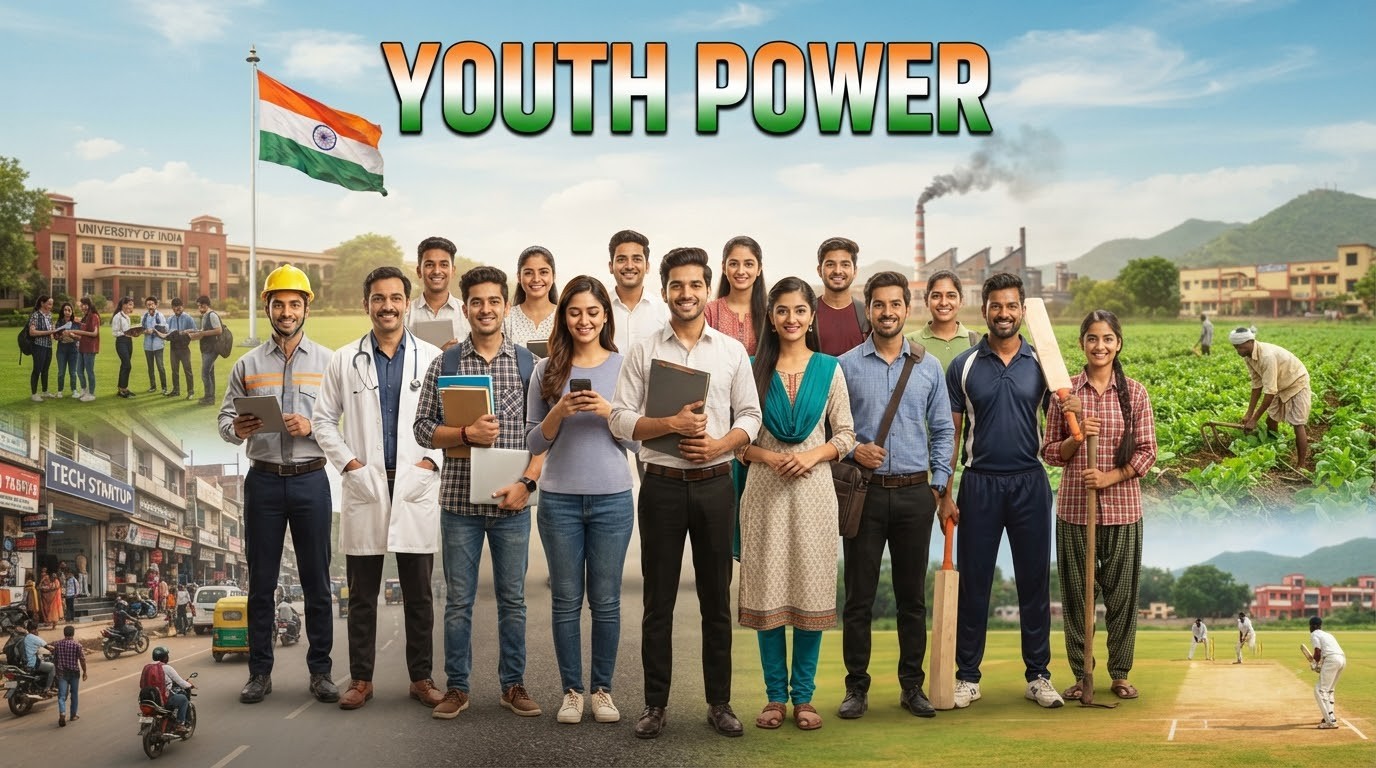
India’s young population is one of its greatest economic advantages. More than 54% of the country’s population is below the age of 25, while over 62% belongs to the working-age group of 15–59. This demographic strength can accelerate growth—but only if young people receive the education, skills and opportunities needed to participate productively in the economy. Skills development must now go beyond traditional degrees. Employers increasingly value digital literacy, communication, problem-solving, data analysis, cybersecurity, cloud computing and practical industry experience. Artificial intelligence is adding a new layer to this requirement: young workers need to understand how to use AI tools, verify their output and combine automation with human judgement.
India is expanding training through the Skill India Digital Hub, Industrial Training Institutes, apprenticeships and the Pradhan Mantri Kaushal Vikas Yojana. Under PMKVY 4.0, AI and related technologies have been incorporated into skill Programmes; by June 2026, more than 25,000 candidates had been certified in AI-related job roles.
School-level exposure is also becoming important. The SOAR Programme introduces foundational AI awareness to students in Classes VI to XII and trains educators to bring AI concepts into classrooms. The government has also announced a plan to provide AI-skilling opportunities to one crore young people over the coming year.
Entrepreneurship can multiply the impact of these efforts. Young Indians are building businesses in fintech, health technology, Agritech, clean energy, education, manufacturing, gaming and digital content. Startup support, mentorship, affordable internet access and easier credit can help ideas from smaller cities reach national and international markets.
Employment opportunities are expanding across both technology and traditional sectors. Manufacturing, healthcare, logistics, renewable energy, financial services and the creative economy will require workers who can combine sector knowledge with digital capabilities. Apprenticeships and work-based training are particularly valuable because they connect education with real workplace requirements.
The challenge is quality and inclusion. Training must lead to Recognised credentials, practical experience and actual employment rather than merely certificates. Young women, rural students and learners from economically weaker backgrounds must also have access to devices, connectivity, mentors and safe workplaces.
India’s demographic dividend is not automatic. A large youth population becomes an advantage only when supported by strong schools, relevant skills, healthy workplaces and entrepreneurial freedom. If India invests in its young citizens today, youth power can become the foundation of innovation, productivity and inclusive growth for decades to come.
Report Author
View Research Team →ashusharma02
Related Analyses
2026-08-17