



weekly updates
Semiconductors – Building India’s Technology Self-Reliance
By ashusharma02•Published: 2026-08-18•6 min read
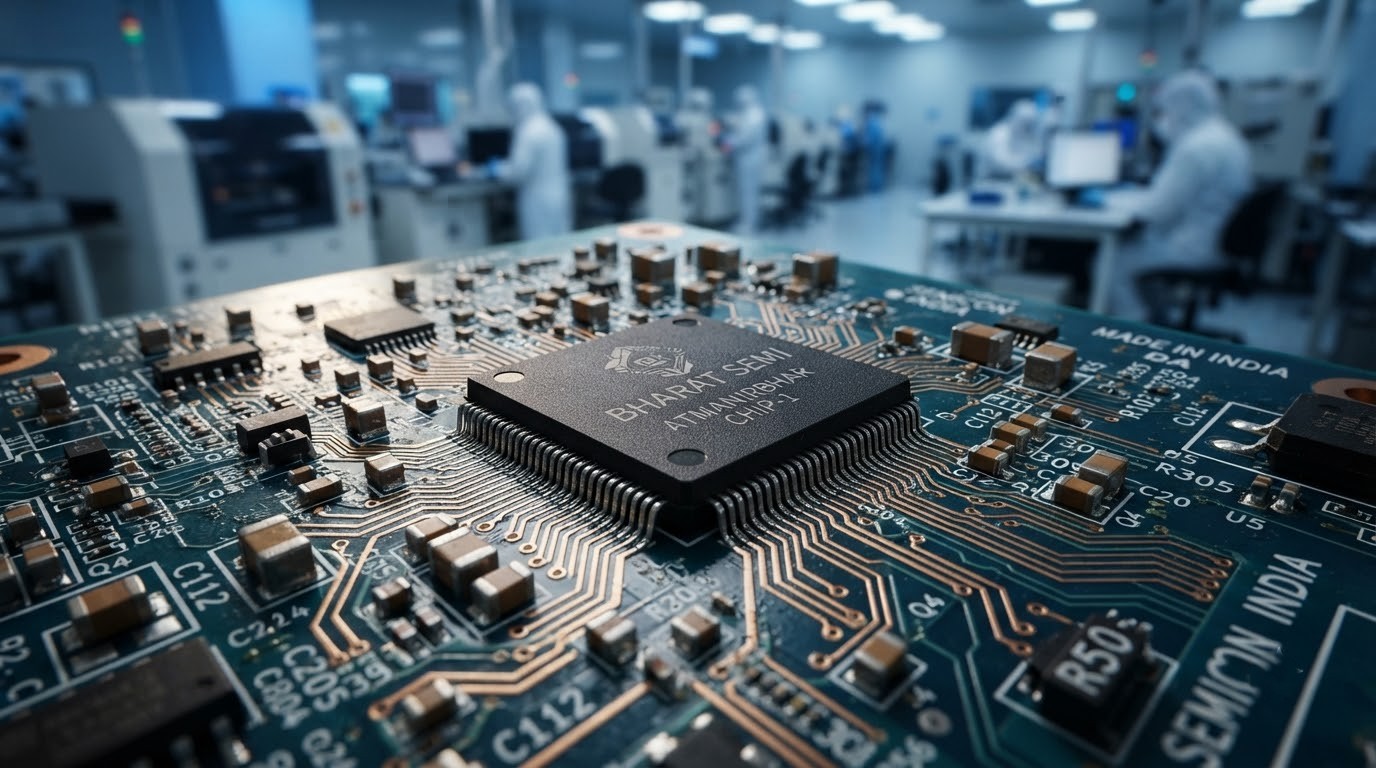
Semiconductors are the invisible foundation of modern economies. They power smartphones, cars, medical equipment, telecom networks, defence systems, data centres and artificial-intelligence infrastructure. For India, developing a domestic chip ecosystem is therefore not only an industrial opportunity—it is a strategic necessity.
The global chip shortage exposed the risks of relying heavily on a small number of countries for advanced components. Disruptions caused by geopolitical tensions, supply-chain bottlenecks or natural disasters can affect entire industries. Local manufacturing, packaging and chip design can give India greater resilience while reducing dependence on imported technology.
India’s semiconductor push began with the India Semiconductor Mission, which supports fabrication plants, assembly and testing facilities, display manufacturing and chip design. The government has approved 12 projects across six states, involving investment commitments of more than ₹1.64 lakh crore. Three facilities have already entered commercial production, signalling a shift from policy announcements to operational capacity.
The next stage is Semicon 2.0. Approved in July 2026, the programme carries an outlay of approximately ₹1.275 lakh crore and aims to expand support for fabrication, advanced packaging, equipment, materials, research and development, and indigenous intellectual property.reuters+1
Partnerships will be essential. India’s first major front-end fabrication facility in Gujarat is being developed by Tata Electronics with technology and equipment support from ASML. The planned 300-millimetre facility illustrates how Indian investment, international expertise and government incentives can work together to build a complex industry.
Semiconductor manufacturing can create high-value jobs for engineers, technicians, researchers and supply-chain professionals. It can also stimulate demand for chemicals, specialised machinery, clean-room services, logistics and industrial infrastructure. Universities and training institutions will need to expand programmes in chip design, materials science, electronics manufacturing and equipment maintenance.
Yet self-reliance does not mean producing every type of chip domestically. India’s most practical path may involve combining strengths in design, mature-node manufacturing, power electronics, sensors, automotive chips, packaging and testing. These segments can create a strong foundation before the country competes in more advanced technologies.
The challenge is execution. Semiconductor projects require enormous capital, reliable electricity and water, highly skilled workers, strict quality control and long-term policy stability. If India can build this ecosystem, chips could become a strategic pillar of its manufacturing revolution and digital economy—helping the country move from importing technology to designing, producing and exporting it.
Report Author
View Research Team →